OAuth2 and OpenID Connect
The standards your languages and frameworks already have libraries for.
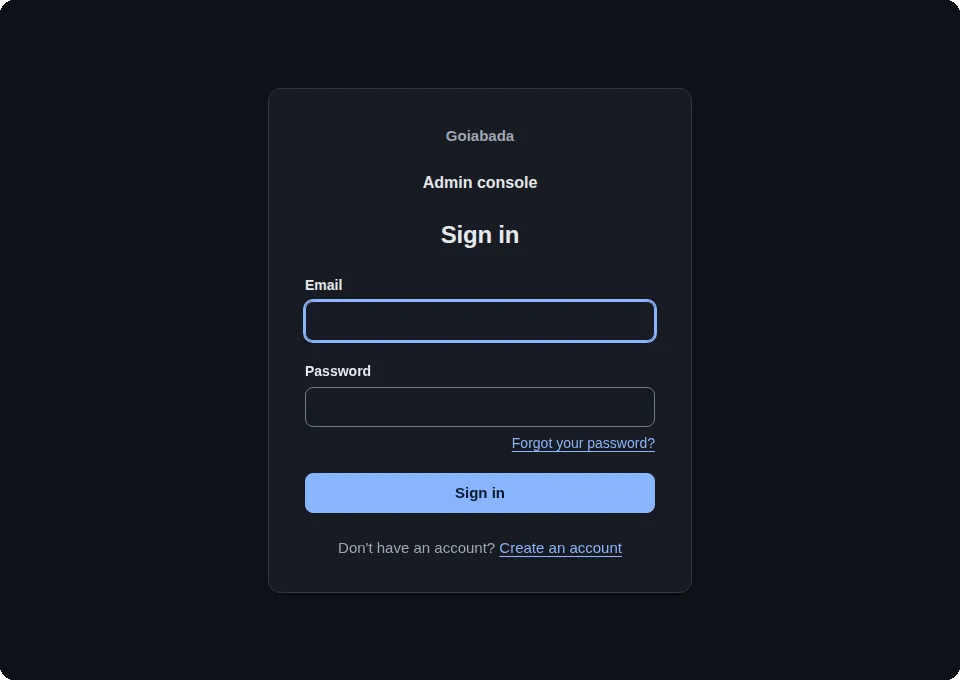
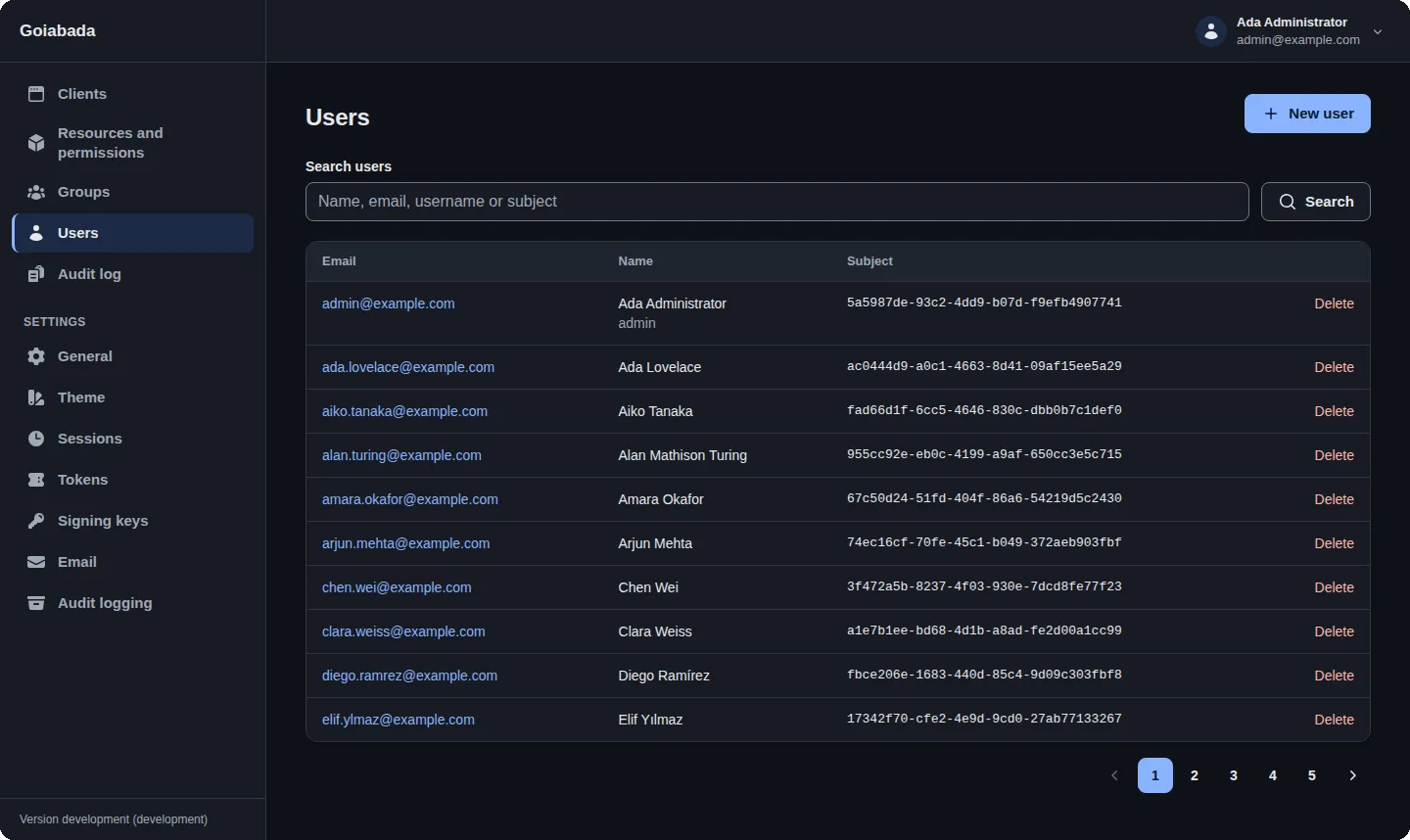
Goiabada signs your users in, so your apps don’t have to. It’s an OAuth2 and OpenID Connect server: your apps send users to it, and get back tokens that say who each user is and what they can do.
OAuth2 and OpenID Connect
The standards your languages and frameworks already have libraries for.
Single sign-on
Users sign in once and use all your apps.
Two-factor authentication
Codes from an authenticator app, required for the apps that need them.
Permissions
Decide who can do what in your APIs, by user, group or client.
Custom claims
Add groups and your own user and group attributes to ID tokens, access tokens or both.
Self-service accounts
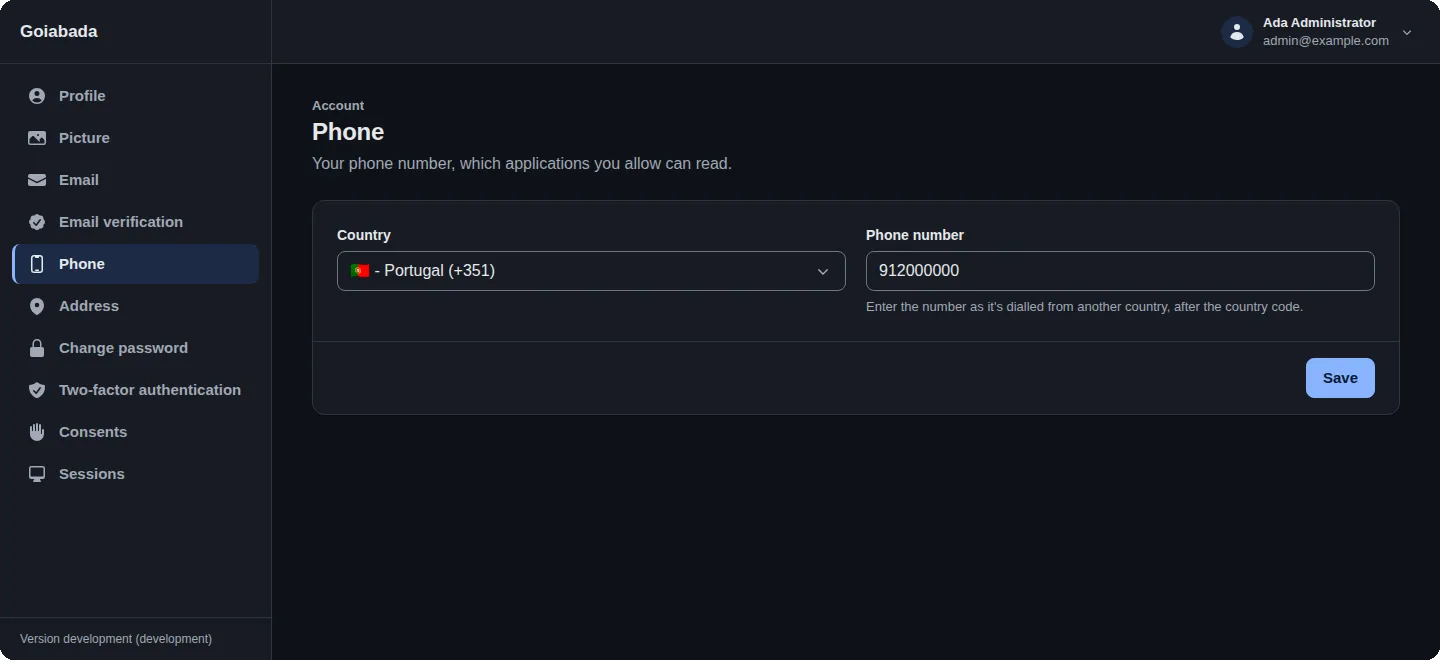
Users manage their own profile, picture, email, phone, address, password and two-factor authentication, end their sessions and revoke consents.
Self-registration and password recovery
People create their own accounts, with or without email verification, and reset a forgotten password.
Dynamic client registration
Apps such as MCP clients register themselves, when you turn it on.
Admin API
Script everything the admin console does, with an OpenAPI reference and permissions as narrow as read-only.
Audit log
Sign-ins, failed passwords and every change an administrator makes, recorded and shown in the admin console.
Your choice of database
MySQL, PostgreSQL, SQL Server or SQLite.
Light to run
Two small Go servers, as Docker images for x86_64 and ARM64, or as native binaries.
Setup wizard
Answer a few questions and get a ready-to-run setup for Docker Compose, Kubernetes or native binaries, keys and passwords included.
Kubernetes friendly
Generated manifests with probes, graceful shutdown and disruption budgets, Prometheus metrics, and servers that scale out to several replicas.
These docs are also published as plain text, for AI agents and tools that read documentation:
/llms.txt lists every page, with its title, URL and a one-line description./llms-full.txt holds every page in full, as Markdown, in one file.